
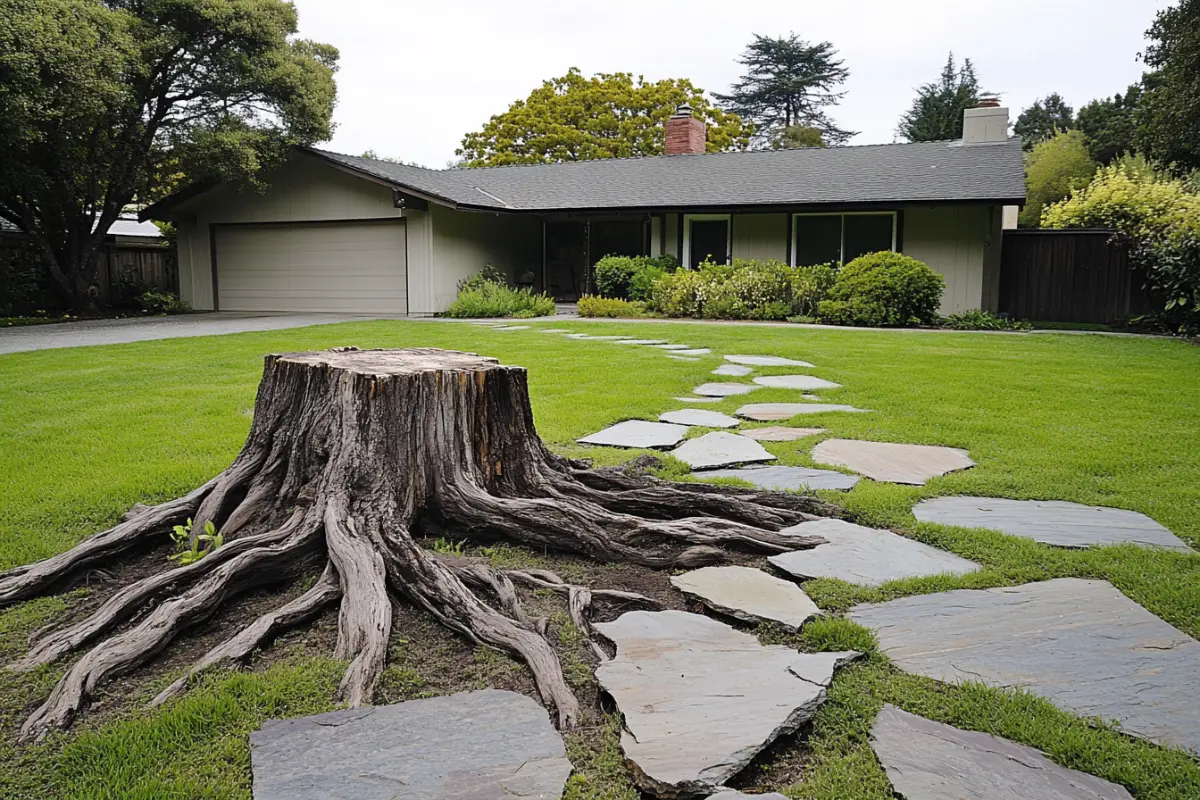
Taking out a stump doesn't always take out the problem. The roots that ran out from it are still there, and some of them sit right at the surface. In the older neighborhoods of Mill Valley, it's common to find a thick redwood root running under a lawn and lifting it into a ridge, or one pushing up the edge of a brick path. Around Larkspur, creekside yards with old bays and oaks have the same issue. Those roots won't flatten out on their own. Mowers scalp them, sprinkler lines break around them, and pavers sitting on top rock and crack. Root grinding cuts them down below the surface so the ground can be leveled and the lawn, path or patio can go back down flat.
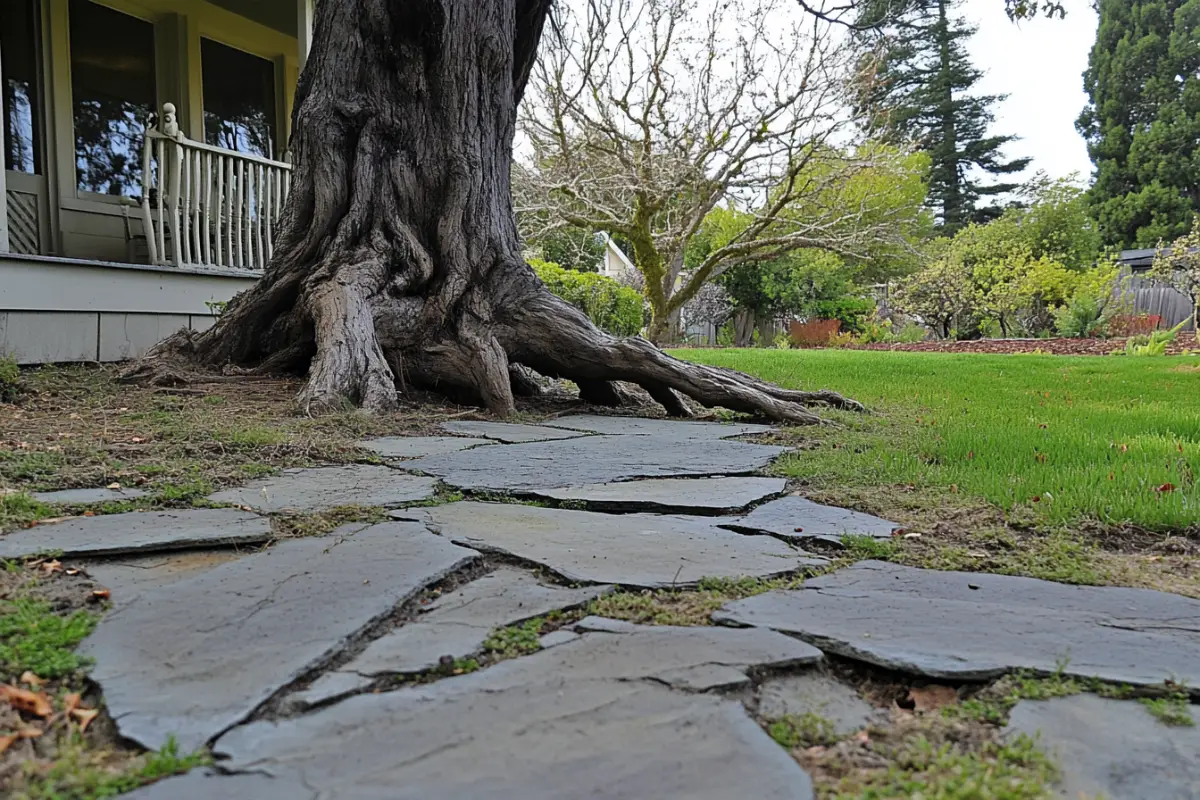
Below: the roots that cause the most trouble in Marin, where they show up and what each spot needs, how we find and grind them, and when the right first call is an arborist instead of us. If the old stump hasn't been dealt with yet, our stump grinding service takes care of both in the same visit. Most root jobs are small, and they're often added on to a stump job that's already on the schedule.
Redwood and Eucalyptus Roots That Won't Quit
Most roots die back once the tree is gone. Redwoods and eucalyptus are where Marin yards run into trouble. Both can keep a root system alive after the trunk is cut, and redwoods in particular send up new shoots from roots several feet away from the old stump, sometimes in a line right across the lawn. Cutting the shoots alone doesn't end it, because the root keeps feeding them. Grinding the live root out, along with the stump if it's still there, takes away the wood that's doing the sprouting. Most fruit tree and ornamental roots behave better. They tend to stay where they are and rot slowly, and grinding them is about getting the surface flat again. With a live redwood root, leaving it alone just means more shoots each spring.
Roots Under Lawns, Paths and Decks
Where the root sits changes the job. Under a lawn, it's usually a ridge the mower keeps catching, and grinding plus a strip of topsoil and seed puts it right. Give the new seed a few weeks before it looks like the rest of the lawn. Under a brick or flagstone path, the pavers lift off by hand, the root gets ground down with room left for new base material, and the path is ready to reset. Under a concrete walk or slab, the concrete has to be cut and lifted first, since a grinder works on wood and soil, not concrete. Under a low deck, it depends on the clearance and whether boards can come up. Tell us where yours is and we'll tell you which of these you're looking at.
How We Find and Grind a Root
We start by tracing it. A shovel and a probe show where the root runs and how deep it sits, and we lift turf along its path where needed so we can see it clearly. Anything sitting on top, like pavers or stepping stones, gets stacked off to the side. Then the grinder follows the root, taking it down several inches below grade, a little deeper under paths so there's room for base. If the old stump location is close, we grind right back to it, so no piece is left behind to keep pushing up. The trench gets backfilled and leveled, and the turf goes back where it came from. Any shoots that come up afterward from a redwood root are worth a quick call, since a missed piece is easy to finish off.
When to Call an Arborist First
If the roots belong to a healthy tree you want to keep, grinding isn't automatically the right move. Big roots near the trunk anchor the tree and carry its water, and cutting too many, or cutting too close, can leave a tree stressed or unstable. That matters in Marin, where winter storms bring wind and soaked soil at the same time. An ISA certified arborist can tell you which roots are safe to cut and whether a root barrier makes more sense. Some trees are also covered by town tree rules, so check with your town before major root work on a tree you're keeping. Once you have the go-ahead, we're glad to do the grinding. The arborist's notes also tell us exactly which roots to take, which keeps the job quick.
And if the roots are one piece of a bigger project, like a slab going in, full stump removal clears the stump and the root ball together.
Common Questions
It can, which is why we're careful about it. Roots close to the trunk hold the tree up and feed it, and cutting them can leave the tree stressed or unstable. On a tree you're keeping, we'll only grind roots well away from the trunk, and for anything bigger, we'll ask you to have an arborist look first. Roots from trees that are already gone are a different story, and those we grind without a second thought.
A single root under a lawn is quick work. A tangle of roots under a path, or a long run back to an old stump, takes longer, mostly because of the digging and the pavers that have to come up before the grinder can get in. If you're already booking a stump grind, adding the roots around it usually adds only a little time to the same visit. We'll give you a realistic window when we quote.
Yes, and it's usually the best way to do it. The grinder is already on site, the route in is already worked out, and the roots near the stump are easiest to follow from the base outward. Doing both at once also means one cleanup and one patch of lawn to repair instead of two. Just mention the roots when you call, so we can plan the time and price for both.