
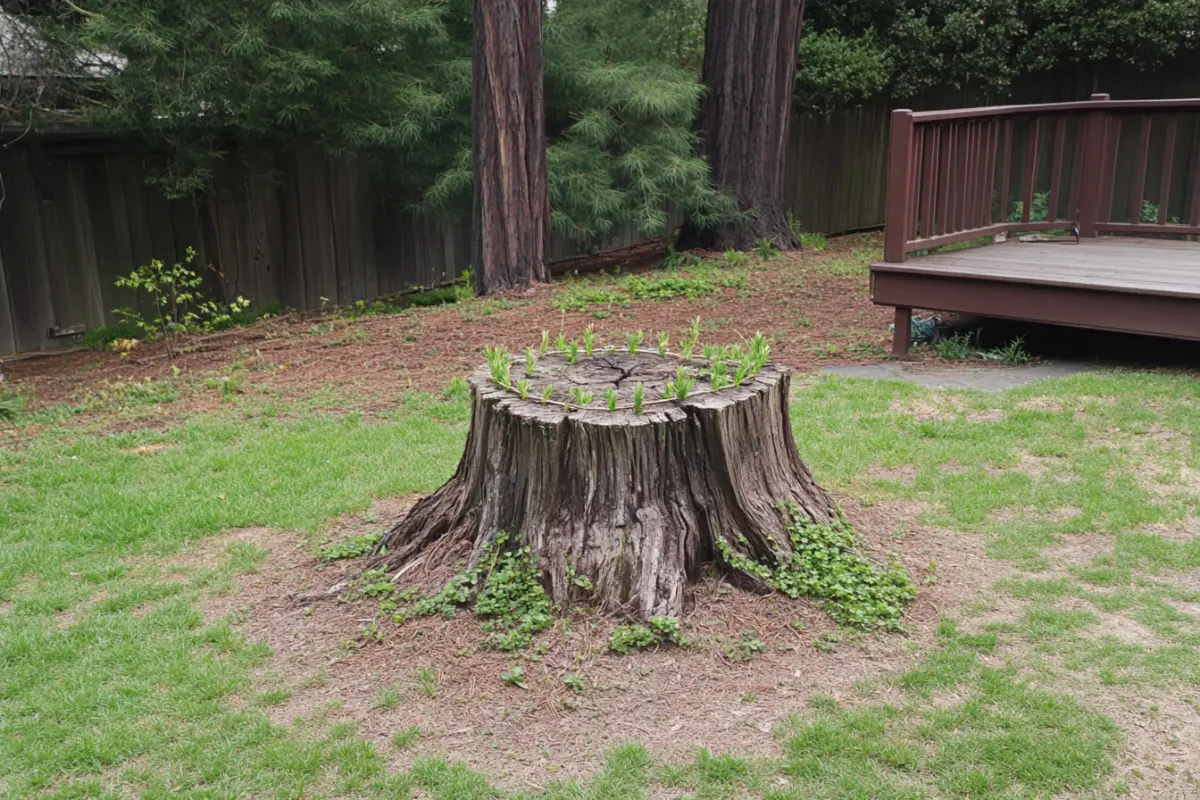
Most stumps we see in Marin are left over from a removal that happened months or years ago. The tree crew cut it flush, hauled the wood, and the stump stayed. Now it's the thing the mower bumps into, the spot where the new patio was supposed to go, or a ring of redwood shoots coming up in the side yard. In San Rafael it's often an old backyard ornamental or a fruit tree that finally gave out. Up in the hills around Novato, it tends to be eucalyptus or oak, bigger and harder, sometimes on a slope. The fix is the same either way. A grinder chews the stump down below the dirt, and the hole gets filled so the ground is usable again.
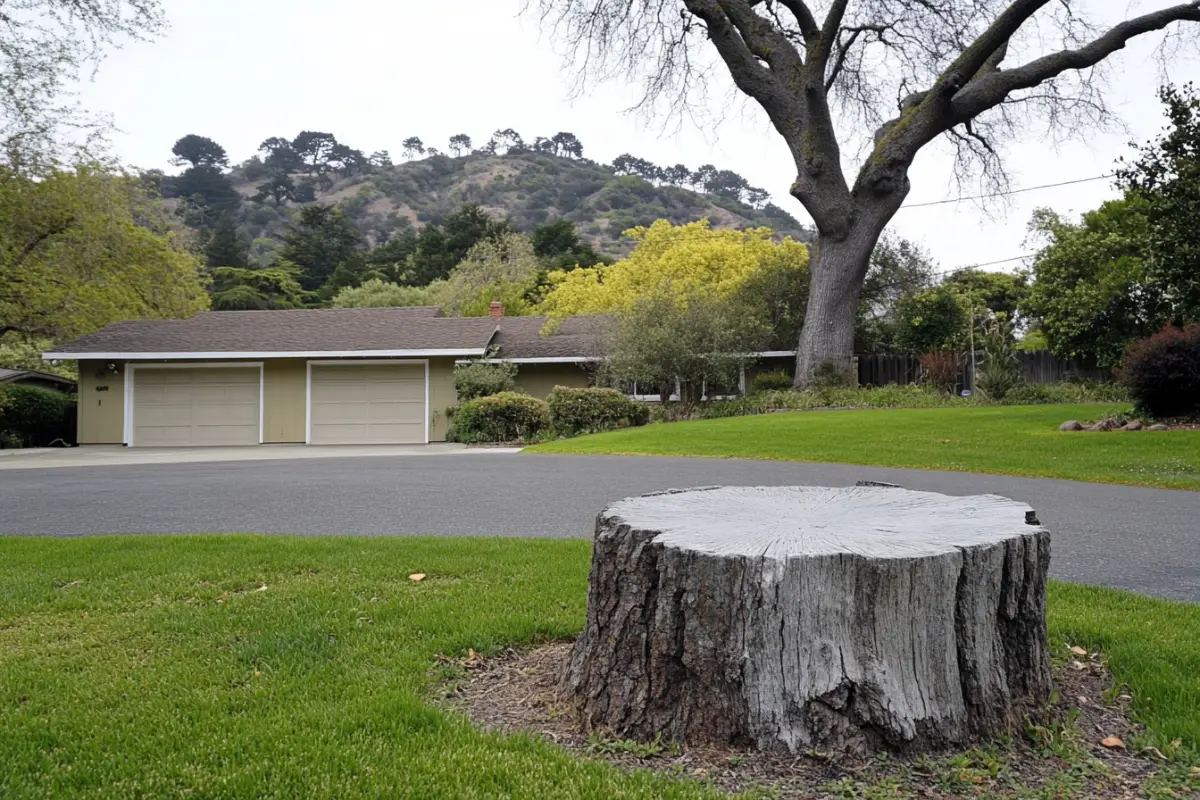
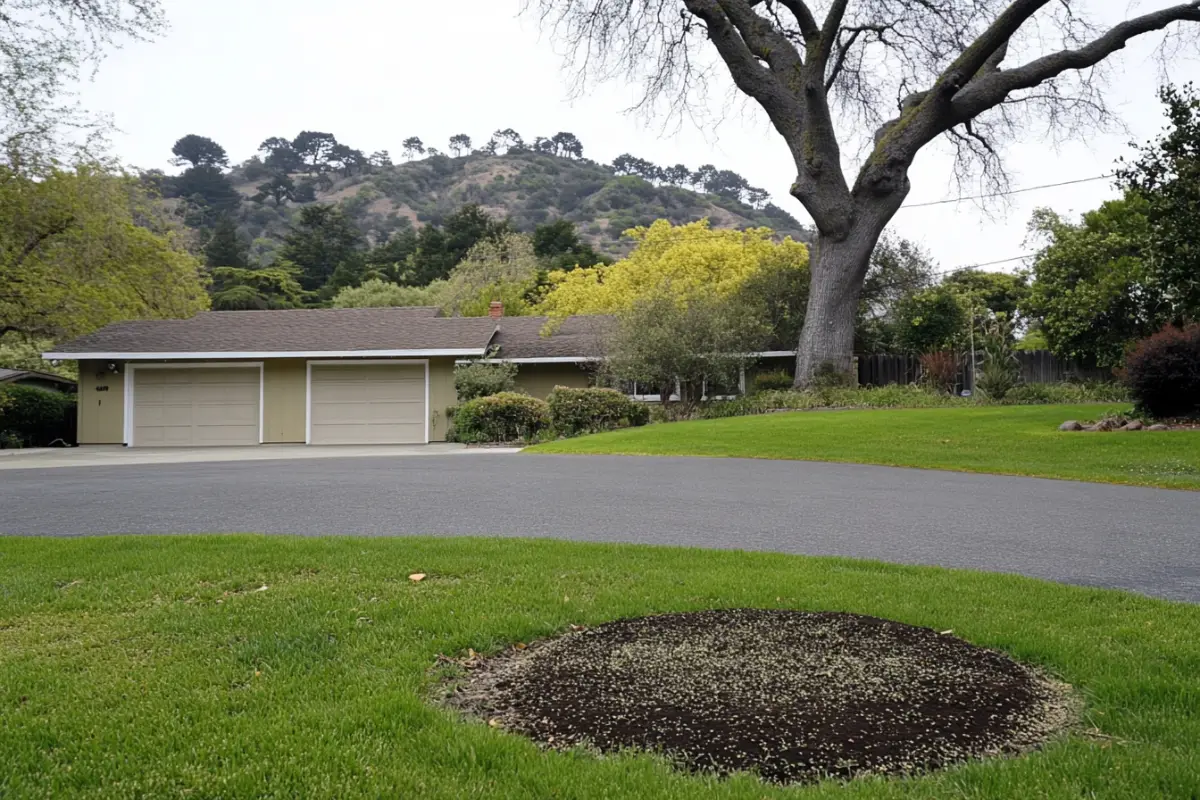 BeforeAfter
Below, we cover the stumps Marin yards tend to end up with, how we get a grinder to the awkward ones, what the day itself looks like, and what happens to the chips afterward. If you're planning to build directly over that spot, grinding may not go far enough, and stump removal is the better route. Either way, the estimate is free, and you'll know the plan before any machine shows up.
The Stumps Marin Yards End Up With
Redwood is the big one. Cut a redwood and the stump often answers with a ring of new sprouts around its edge, and those shoots grow fast. Eucalyptus does something similar, pushing new growth straight out of the stump. Oaks are a different story. A lot of the oak and tanoak stumps around central Marin are left from trees lost to Sudden Oak Death, and those don't sprout so much as sit and rot, which draws ants and fungus. Then there are the ordinary ones: a plum or apple that quit producing, a juniper hedge pulled out, an acacia that came down in a winter storm. Each wood grinds a little differently, but every one of them is a normal day's work for us. Most homeowners don't know what kind of tree it was, and that's fine. We can usually tell from the wood.
Grinding on a Slope, Behind the House or Down the Stairs
Access is the real variable in Marin, more than stump size. Backyard stump grinders are compact machines, narrow enough for most side gates, and they move on their own wheels or tracks. Tracks handle soft ground and slopes better and spread the weight, which is easier on a lawn. Steps are the usual obstacle, so we check the route before the day: gate width, the number of stairs, how steep the yard drops, and what's along the path that needs protecting, like pavers, sprinkler heads or planting beds. Where the machine can't safely go, there's usually another way in, through a neighbor's side yard with their OK, or a different angle on the stump. You'll hear it from us before the day if a spot is truly out of reach. A full-size tow-behind grinder only comes into play on big, open jobs.
What Happens on the Day
Before anyone grinds, underground lines get marked. California requires an 811 request at least two working days ahead of digging, and we put it in. On the day, we walk the grinder to the stump, lay protection down over soft lawn where it rolls, and clear a working circle. The wheel goes on, and the stump comes down a little with each sweep until it's below grade. Then we follow the larger roots out from the base a few feet and take those down too, so nothing is left humped up at the surface. Small stumps go quickly, often well under an hour of grinding. If you're home, we'll check the depth with you before cleanup starts, so you can see the spot is ready for what you're planning. The rest of the visit is cleanup, which you decide.
Chips, Backfill and Putting the Lawn Back
A good-size stump leaves a surprising pile of grindings, often more than a couple of wheelbarrows. You have three choices. Leave them in the hole, where they'll settle and slowly break down, which works under shrubs or in a mulched bed. Have us haul them off, which is the cleanest path if you're laying sod or setting pavers. Or keep a pile for paths and around trees. If lawn is going back in, we'll pull most of the chips out and fill with topsoil, which keeps the spot from sinking as much over the following months. Tell us your plan during the estimate and we'll price the cleanup that fits it. Topsoil runs a little extra, and we'll quote it separately so you know the number ahead of time.
If it's the roots running across the yard more than the stump itself that bother you, root grinding handles those on their own.
Common Questions
You can let it rot, but plan on a long wait. A big stump can take many years to break down on its own, longer for decay-resistant wood like redwood, and it's a draw for ants and termites the whole time. Redwood and eucalyptus may keep sprouting from it, too. Grinding gets you the space back in one visit. For a small stump in a back corner nobody uses, waiting can be a reasonable call.
Yes, and you decide how far it goes. At a minimum, we rake the grindings into the hole and sweep the paths and patio around it. From there, we can haul the chips off, fill the hole with topsoil, or leave a pile for mulch. Hauling is the part that changes the price, so we'll settle it during the estimate. Nothing gets left scattered across your lawn.
Not much, if it's planned right. The machine weighs less than most people expect, and on soft lawn we lay protection down along the route and work from one spot instead of driving back and forth. Wet winter ground is the hardest on turf, so in the rainy months we may suggest waiting for a dry stretch. The area right around the stump will need patching either way, since that's where the grinding happens.